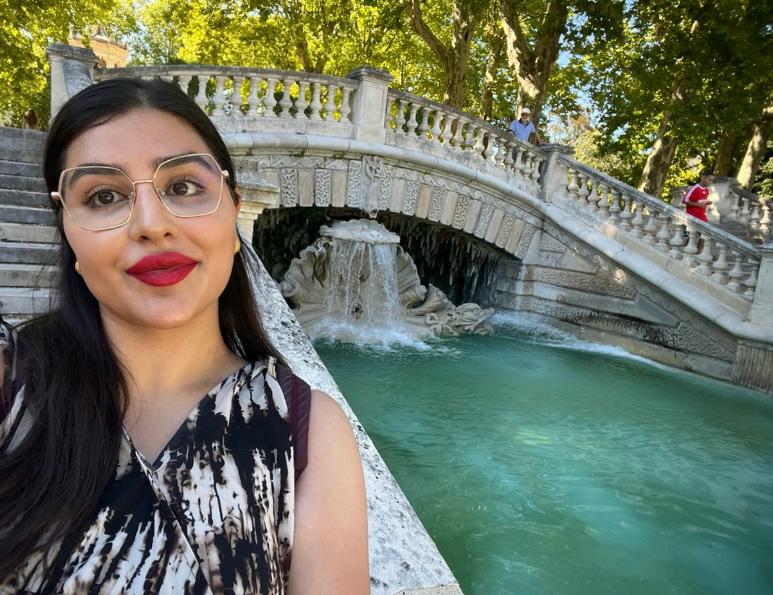
This summer, I’ve swapped my usual routine for something a little different. Instead of staying buried in my work, I decided to slow down, travel, and immerse myself in a new challenge: learning French while spending time in France and its surrounding regions.
For someone who’s usually a bit of a workaholic, it’s been such a joy to combine travel, study, and a slower pace of life. So far, I’ve explored Marseille, Dijon, Lyon, Paris, and Geneva — with Torino, Avignon, and Annecy still ahead. Each city has offered not only new experiences but also countless opportunities to practise, stumble, laugh, and slowly grow more confident in French.
Why a language?
From a cognitive neuroscience perspective, the more complex learning you do, the better it is for your brain. Research shows that bilingualism is linked to improved memory, greater cognitive flexibility, and even long-term brain health. Learning a new language doesn’t just add vocabulary and grammar but it keeps the brain active, adaptable, and resilient. Scientists call this cognitive reserve, the brain’s ability to build “backup pathways” that protect against decline as we age.
I also have to credit Thomas Bak, whose videos on bilingualism and multilingualism first inspired me to learn a new language. His research and insights made me realize how transformative learning another language can be for the brain and for life-long learning.
Strengthen Your Brain Every Day
Learning a language is just one way to keep your brain active. Here are a few other habits that science shows can boost your cognitive reserve:
 Boost Your Brain: 5 Simple Habits
 Learn something new every day (language, instrument, skill)
Challenge your mind with puzzles or problem-solving
Stay physically active as your brain loves movement
Read widely and explore new ideas
Socialise and connect — conversation stimulates the mind
 Bonus: Combine travel and learning for double the brain benefit!
Learning by Example
As an educator, I believe deeply in being a positive role model. I want my students to see that learning can happen anywhere, at any age, and that curiosity is one of the most powerful habits we can nurture. If I can step into the challenge of learning a language, they can take on challenges of their own. I’m so proud of my students — several are also working on new languages right now, and it’s inspiring to learn alongside them.
More than Just Words
This journey has reminded me that learning is about mindset, resilience, and the joy of discovery. It’s about allowing yourself to feel uncomfortable at times, pushing through, and coming out stronger on the other side. Every conversation, every mispronounced phrase, every “aha” moment is another step toward building not just linguistic skills, but also a stronger, more flexible mind.
And that’s the real gift of learning: it shapes who we are far beyond the classroom.
 No Typical Classroom
Leave a comment